
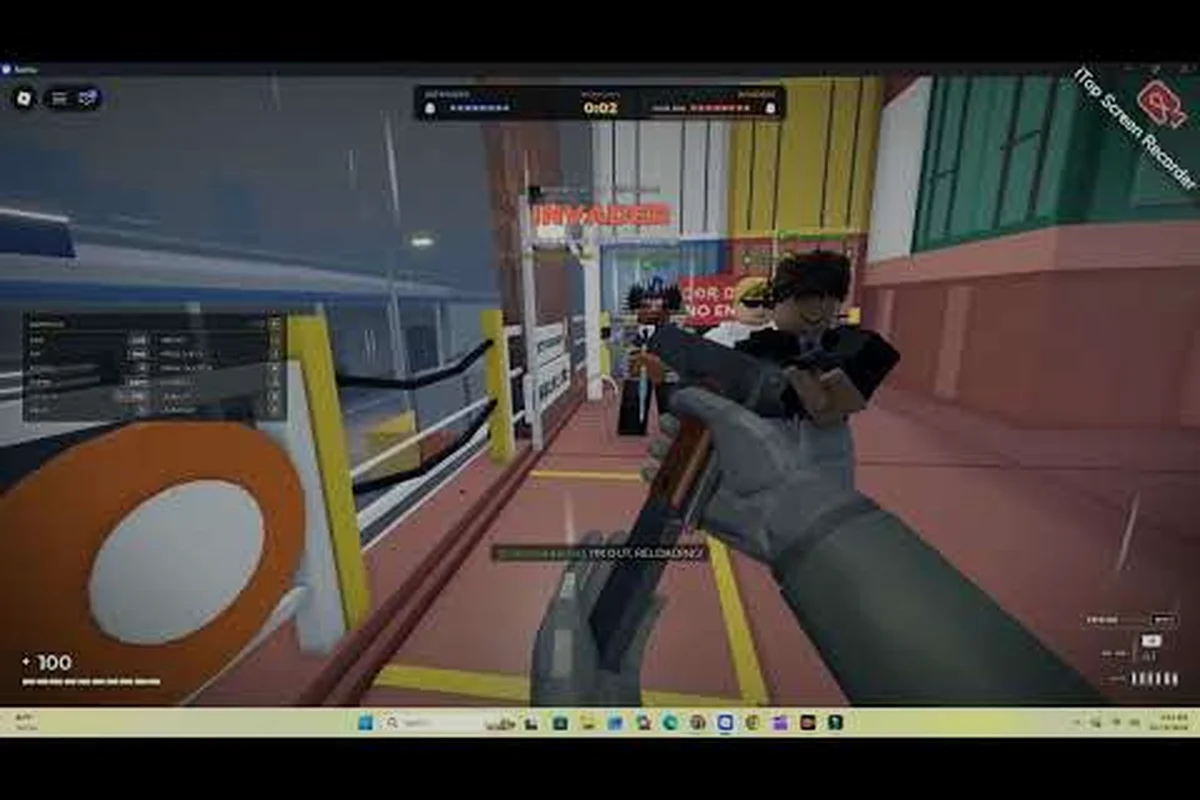
The REALISTIC HOME DEFENSE patch notes October cycle brought a wave of alpha fixes that changed how the defense loop actually feels. If you have been holding off on the current build, this breakdown covers what landed, what still feels rough, and whether now is the right time to jump back in.
What the October Alpha Patch Cycle Actually Changed
The October alpha window was not a content drop in the traditional sense. It was a stabilization pass, and that distinction matters because it shapes how you should read every line of these notes. According to community reports and the fixes-focused alpha footage shared by PAUL ANTHONY SOTO V2, the bulk of the work went into making existing systems behave predictably rather than adding new toys.
That is a good sign for a Roblox defense experience in alpha. A realistic home defense content update that arrives before the core loop is stable tends to create more bugs than it solves, so a fix-first cycle usually means the developer is listening to the player base.
Here is the high-level shape of the October pass: five fix categories that map directly onto the pain points alpha testers logged most often — defense placement, server sync, hit registration, UI readability, and spawn logic. What ties them together is a single design goal: eliminating the "phantom failure" moments where your barricade should have held, your melee swing should have connected, or your ammo count should have been visible. For a realistic home defense content update still in alpha, that means the October patch notes read less like a feature list and more like a reliability audit. If you are tracking the realistic home defense update schedule, treat this cycle as the baseline — future updates will likely build on these fixes rather than replace them.
-
Defense placement fixes — objects no longer clip through walls when snapped near corners
-
Server sync improvements — reduced rubber-banding during multi-player raids
-
Hit registration tuning — melee and ranged impacts now resolve more consistently
-
UI readability pass — health and ammo indicators scale better on smaller screens
-
Spawn logic cleanup — intruders no longer appear inside sealed rooms
None of these are flashy, but together they remove the friction that made the alpha feel unfair in tight moments. The realistic home defense gameplay changes in this cycle are about trust: you need to believe the game will register your actions correctly when a breach is happening.
Why Fix-First Cycles Matter in Alpha
An alpha build lives or dies on whether testers can reproduce problems. When placement, sync, and hit detection are all unstable at once, bug reports become noise because nobody can tell which system caused a failure. By tightening those three layers in one pass, the October cycle makes future reports far more actionable.
That cadence is also why the realistic home defense update schedule has stayed deliberately slow: the team batches fixes into meaningful windows rather than shipping daily hotfixes that fragment the player experience. A concrete example is how placement, sync, and hit detection were bundled into a single October pass instead of three separate patches — each interim build would have reset server state and invalidated existing bug reports, forcing testers to re-verify fixes against a moving target. Batching also keeps the realistic home defense server update cadence predictable, so community servers can schedule wipes and mod re-validation around announced windows rather than reacting to surprise hotfixes mid-session.
Server Update and Multiplayer Stability
The realistic home defense server update was the headline item for anyone playing with friends. Before this pass, hosting a session with three or more defenders frequently produced desync where one player would see a door intact while another saw it already breached. That mismatch is fatal in a defense game, because coordination depends on everyone sharing the same reality.
The October build addresses this with tighter state reconciliation. In practice, that means when a barricade takes damage, the health value propagates to all clients faster and conflicts resolve in favor of the server rather than the local prediction. The mechanism behind it is a shorter reconciliation window: instead of letting each client run its own barricade health for several ticks before correcting, the server now pushes the authoritative value on the same tick the damage registers, so a defender watching a doorframe sees the same hit count as the host. This matters most during coordinated breaches, where two players stacking damage on the same barricade previously produced split health pools that drifted apart under latency. The tradeoff is slightly more bandwidth per barricade event, but the patch notes confirm the server update absorbs it without raising the tick budget.
| Issue Before October | Behavior After the Patch | Player Impact |
|---|---|---|
| Door states desynced across clients | Server-authoritative door health | All defenders see the same breach state |
| Rubber-banding during raids | Reduced prediction rollback | Smoother movement under load |
| Late-joining players saw stale layouts | Layout re-sync on join | New joiners spawn into the correct build |
| Intruder spawns inside sealed rooms | Spawn validation against geometry | No more instant interior breaches |
| Damage numbers disagreed between players | Unified hit resolution | Consistent feedback for the whole squad |
The practical takeaway is that squad play is now viable in a way it was not a month ago. If your group bounced off the alpha because of phantom breaches, the realistic home defense server update is the reason to try again.
Reading the Sync Fixes as a Player
You do not need to understand reconciliation algorithms to benefit from them. What you will notice is that when you shout "they are at the back door," your teammates are actually looking at the same back door state you are. That single change converts voice chat from a source of confusion into a genuine tactical tool.
Gameplay Changes That Affect Your Defense Build
Beyond stability, the October pass nudged several gameplay values. These are small adjustments individually, but they compound into a different feel for the realistic home defense gameplay changes regulars have been requesting. The most discussed shift is that barricade durability now degrades in clearer steps, so you can read how close a barrier is to failing without guessing.
The full picture of what shifted is easier to absorb in a comparison table, because the October pass touched five interlocking systems at once — barricade durability, melee hit registration, ranged accuracy, intruder pathing, and placement snapping — and reading them side by side shows how a single tuning change ripples into your build. For example, the tighter mid-range grouping only matters because intruder pathing now routes flanks more decisively, pushing contacts into the 8–15 meter band where the old spread used to punish you; likewise, flush placement snapping means the tight-corner chokepoints you abandoned are worth rebuilding, but only if your repair rotation keeps those barricades above the first crack stage.
| System | Old Behavior | October Behavior | What to Adjust |
|---|---|---|---|
| Barricade durability | Smooth, hard-to-read decay | Stepped decay with visual cues | Repair earlier, watch the crack stages |
| Melee hit registration | Occasional ghost swings | Consistent contact detection | Trust close-range holds more |
| Ranged accuracy | Noticeable spread at mid-range | Tighter mid-range grouping | Mid-range overwatch is now viable |
| Intruder pathing | Sometimes stalled at corners | More decisive routing | Expect faster flanking routes |
| Placement snapping | Clipped through thin walls | Snaps flush to surfaces | Rebuild tight corners you abandoned |
If you have been running a build that leaned on mid-range suppression, the accuracy tuning quietly buffed your setup. Conversely, players who relied on barricades holding forever will need to adopt a repair rotation, because the stepped decay makes neglect far more punishing.
For a deeper look at how weapon tuning has evolved across cycles, the new weapons update breakdown tracks the stat shifts that matter most. That matters here because the October ranged-accuracy change is not a standalone buff — it is the third consecutive pass tightening mid-range grouping, and each pass has been paired with a pathing tweak that funnels intruders through the 8–15 meter band. Read the two histories together and the pattern is clear: the developers are deliberately steering engagements toward mid-range overwatch, so a build still optimized around long-lane suppression is fighting the meta rather than riding it.
Rebuilding Your Layout After the Placement Fix
The placement snapping fix sounds minor until you realize how many players had quietly given up on corner fortifications. Before October, snapping a barricade near a thin interior wall could push it partially through the surface, leaving a gap an intruder could exploit. Now that objects snap flush, tight interior chokepoints are genuinely worth building again.
Start by re-testing the corners you wrote off. A flush barricade in a hallway junction creates a funnel that concentrates intruders into your best firing lane, and that geometry was simply unavailable in the previous build. The practical workflow: drop a barricade tight against the junction wall, confirm the snap indicator shows zero gap, then layer a second barricade one tile back to form a staggered choke. That two-piece setup forces raiders through a single-tile opening while you hold the long sightline from the adjacent room, and it costs noticeably less material than the old free-standing wall stacks that relied on guesswork. Pair it with a door sensor on the approach side so you get audio confirmation before the funnel fills, and re-test each rebuilt corner in a solo dry run before committing to a full perimeter.
Release Date, Schedule, and What Comes Next
The realistic home defense update release date question comes up constantly, and the honest answer is that alpha builds ship when they are ready rather than on a fixed public calendar. The October pass rolled out in stages across the month, with the fixes-focused build appearing mid-cycle and stability follow-ups landing after community feedback.
| Cycle Type | What to Expect | How to Prepare |
|---|---|---|
| Fix pass (like October) | Stability, sync, hit detection | Re-test old layouts and report bugs |
| Content pass | New tools, intruder types, maps | Save your build ideas in advance |
| Balance pass | Stat tuning on existing gear | Re-evaluate your loadout |
| Hotfix window | Small urgent corrections | Check notes before long sessions |
The realistic home defense update schedule has consistently favored fewer, larger windows over constant churn, and that rhythm is worth planning around. If you want the running record of every cycle in one place, the full update log keeps the timeline straight so you are never guessing which build you are on.
How to Time Your Play Sessions
Because builds arrive in batches, the smartest approach is to play heavily right after a fix pass lands, when your bug reports are most likely to be reproducible and useful. During quiet stretches between windows, use the time to experiment with layouts rather than chasing progression, since balance values may shift underneath you.
Practical Tips for the Current Build
Knowing the notes is only half the job. The other half is translating them into habits that survive the next patch. These tips reflect how the October changes actually play out in a live session, drawn from community testing and the mid-October gameplay capture shared by DeezNuts112.
-
Repair in stages, not all at once — stepped decay means a barricade at the first crack stage is still cheap to fix, while one at the final stage costs far more
-
Claim mid-range windows — the accuracy tuning rewards holding sightlines that were previously too unreliable
-
Rebuild interior chokepoints — flush snapping makes hallway funnels viable again
-
Test with a full squad early — server sync improvements only reveal themselves under real multiplayer load
-
Report desync immediately — the fix pass makes reports actionable, so a clear repro is genuinely valuable
The through-line here is that the October build rewards players who adapt their habits to the new numbers instead of clinging to what worked before. A defense that was optimal in September is not automatically optimal now. Concretely: pre-patch layouts that stacked every barricade at the outer perimeter now bleed repair scrap under stepped decay, because a first-crack barricade costs a fraction of a final-stage one, so spreading repairs across the raid beats one big rebuild. Likewise, players who abandoned mid-range sightlines under the old accuracy values should reclaim them, since the tuning pass makes those windows land hits they previously missed. Treat the October numbers as a fresh baseline, re-test your chokepoints and repair rotation in a full-squad session, and let the mid-October capture from DeezNuts112 serve as your reference build rather than muscle memory from September.
Common Mistakes After a Fix Pass
The most frequent error is assuming that because the game is more stable, it is also more forgiving. Stability and difficulty are separate axes. The October pass made the game fairer, not easier, and intruders still punish a neglected barricade line just as hard as before.
A second common mistake is ignoring the stepped decay cues entirely, treating the visual crack stages as decoration rather than a readout. Each barricade passes through distinct damage tiers — hairline stress fractures, then splintering planks, then full panel shear — and each tier maps to a known repair cost and hold time. Skipping those cues means you discover the failure state only when the panel gives way, which in the October build still happens on the same intruder pressure curve as before. Watch the second-stage splintering, not the final crack, and schedule the fix pass before a breach forces it.
Frequently Asked Questions
What did the REALISTIC HOME DEFENSE patch notes October update actually fix?
The October pass focused on defense placement clipping, server sync during multiplayer raids, hit registration for melee and ranged attacks, UI scaling on smaller screens, and intruder spawns appearing inside sealed rooms. It was a stabilization cycle rather than a content drop, so expect the game to feel fairer rather than bigger.
Is the October build worth returning to if I quit the alpha earlier?
Yes, especially if you left because of phantom breaches or desync in squad sessions. The server update makes multiplayer coordination reliable, and the placement fixes restore interior fortification strategies that were previously broken. Squad play is the biggest beneficiary of this cycle.
When is the next REALISTIC HOME DEFENSE update release date?
There is no fixed public calendar for alpha builds. The October cycle rolled out in stages, and the alternating pattern of fix passes and content passes suggests the next meaningful window will likely introduce new tools or intruder types rather than more stabilization work.
Did the October patch change weapon balance?
It adjusted accuracy rather than raw damage. Mid-range grouping is tighter, which quietly buffs overwatch-style loadouts, while melee hit registration is more consistent at close range. Barricade durability now decays in clearer steps, so repair rotations matter more than before.
How often does the REALISTIC HOME DEFENSE update schedule change?
The schedule favors fewer, larger windows over constant hotfixes. Fix passes, content passes, balance passes, and hotfix windows rotate, and the current cycle was clearly a fix pass. Planning sessions right after a window lands gives you the most useful feedback loop.
The October cycle will not be remembered for flashy additions, but it fixed the foundations that made the alpha frustrating. Placement, sync, and hit detection now behave predictably, which means your defense strategy finally gets judged on skill rather than on whether the server agreed with you.