
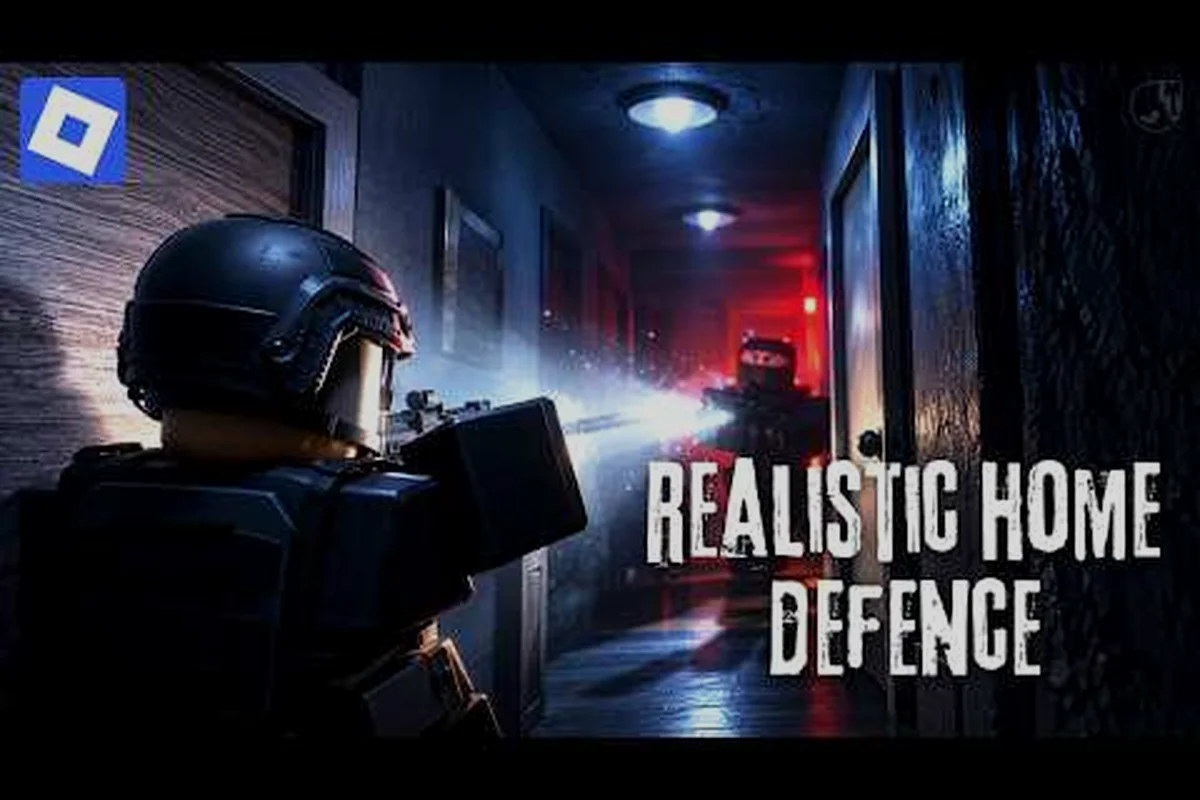
REALISTIC HOME DEFENSE is a first-person tactical shooter on Roblox where a single bad angle ends your run, so a proper survival guide matters more than raw aim. This breakdown covers positioning, ammo discipline, and the defensive habits that keep you alive when the house gets rushed.
What Makes This Home Defense Loop Different
The core of REALISTIC HOME DEFENSE is not run-and-gun shooting. The official game page describes it as a tactical shooter built around realistic weapon mechanics, tactical movement, and close-quarters home-defense action, and that framing changes how you should think about every engagement. You are not chasing kills across an open map — you are holding interior space, and interior space punishes anyone who overextends.
Most deaths in the early hours come from three habits: sprinting into unknown rooms, dumping a full magazine at a doorway, and standing in the open after a trade. Fix those three and your survival time roughly doubles before you learn anything else. The realistic home defense survival guide mindset is defensive first, aggressive second.
Here is the quick baseline every new defender should internalize: treat each room as a fatal funnel, because a doorway concentrates incoming fire into a single predictable line while you control the angle from cover — the same close-quarters logic the official description emphasizes. That is why the three early-death habits (sprinting into unknown rooms, mag-dumping a doorway, standing exposed after a trade) cost so much: each one breaks the funnel in the attacker's favor. Internalize the funnel rule first, and every tactic below reads as a variation on it rather than a separate trick.
-
Hold, don't hunt — let attackers walk into your sightline instead of chasing them through the house.
-
One angle at a time — cover the doorway you can actually watch, not three hallways at once.
-
Ammo is a resource — a reload in the open is a death sentence, so count your shots.
-
Reset after every trade — reposition the moment you win or lose a close exchange.
-
Play with friends for bonus cash — the official description confirms group and friend multipliers stack on your earnings.
That last point matters more than it sounds. Money multipliers mean a coordinated squad earns faster than a solo defender, and faster earnings translate into better defensive tooling earlier in a session. If you are brand new to the mode entirely, the new player guide walks through the very first steps before you worry about tactics.
Reading the House Like a Map
Every house in REALISTIC HOME DEFENSE is a series of chokepoints, and chokepoints are where defenders win. A doorway is a funnel: attackers must cross it single-file, and you only need to watch one slice of space. A hallway is a shooting gallery where the defender with the better angle almost always wins the trade.
The mistake is treating open rooms as safe. Open rooms have four entry points and no cover, which means you can be flanked from any direction. Community players consistently report that deaths cluster in living rooms and stairwells — spaces that feel central but offer nothing to hide behind.
Defensive Positioning That Actually Holds
Positioning is the single highest-value skill in this game, and it is entirely learnable. The rule is simple: never stand where you can be seen from two directions at once. Pick a spot with a wall at your back, one doorway in front, and a piece of furniture you can drop behind if you take damage.
The table below breaks down the four position types you will use most and when each one is correct. Read it as a decision tree rather than a menu: a doorway anchor suits a single known entry but collapses the moment an attacker opens with a flashbang, since you have no lateral cover to break the sightline; a corner peek keeps your exposed body minimal but punishes you with a slow rotation if the push arrives from the stairwell behind you; a stairwell hold denies vertical access on a narrow approach yet traps you if the attacker splits and comes from both ends; and a fallback room exists purely to buy reload and heal time after you lose a trade, offering zero offensive pressure. Match the position to what you can actually hear — footsteps on one approach favor the anchor, silence favors the corner peek.
| Position Type | Best Used When | Strength | Weakness |
|---|---|---|---|
| Doorway anchor | Holding a single entry | One clear sightline, hard to flank | Vulnerable if attacker throws utility first |
| Corner peek | Waiting for a push | Minimal exposed body | Slow to rotate if rushed from behind |
| Stairwell hold | Denying vertical access | High ground, narrow approach | Trapped if attacker comes from both ends |
| Fallback room | After losing a trade | Buys time to reload and heal | No offensive pressure |
Notice that every strong position trades mobility for control. That is the whole philosophy of home defense: you give up the ability to roam in exchange for the ability to make attackers come to you. The movement guide covers how crouching, leaning, and sprint control interact with these positions, and it is worth reading before you commit to a favorite spot.
The Fallback Ladder
Good defenders do not hold one room — they hold a sequence of rooms. Set up a fallback ladder of three positions, each one further inside the house than the last. When the first position gets pressured, you retreat to the second rather than dying on the first.
This ladder concept is why experienced players survive long pushes. Each fallback forces attackers to re-clear space, which costs them time and exposes them to your teammates. A defender who fights to the death in the entryway contributes nothing; a defender who falls back three times drains an entire attacking wave.
Ammo Discipline and Reload Timing
Ammo discipline separates players who survive ten minutes from players who survive two. The instinct after a missed burst is to keep firing, but in a tactical shooter every round you waste is a round you do not have when the real push arrives. Fire in short controlled bursts, confirm the hit, then stop.
The reload is the dangerous part. Reloading takes time, and during that window you are functionally unarmed. The fix is reload behind cover, never in the open — and ideally reload during a lull rather than mid-fight. If you must reload under pressure, break line of sight first, then reload, then re-peek.
| Situation | Correct Action | Why It Works |
|---|---|---|
| Missed a burst at range | Stop firing, reposition | Conserves ammo and hides your position |
| Just won a close trade | Reload immediately behind cover | Next attacker is usually seconds away |
| Taking fire while reloading | Break line of sight first | Prevents a free kill during the reload |
| Low on ammo, no contact | Top off before moving | Full magazine entering a new room |
When to Switch Rather Than Reload
If a second attacker appears while your magazine is nearly empty, switching to a sidearm is faster than a full reload. This is a small habit with a huge payoff: the swap-over-reload decision wins more close-quarters fights than better aim does. Practice it deliberately until it becomes automatic, because under pressure you will default to whatever you have drilled.
Beginner Tips and Tricks That Compound
The best realistic home defense beginner tips and tricks are the ones that stack. A single good habit saves you once; a set of habits that reinforce each other saves you every round. The list below is ordered by impact, so start at the top.
-
Learn one house layout cold before branching out — knowing where the back door is beats knowing five maps vaguely.
-
Set your sensitivity low enough to track — over-sensitive aim causes the wild sprays that empty magazines.
-
Communicate entry direction with your squad so nobody double-covers the same door.
-
Check your corners on rotation, not just on entry — attackers love following you through a room you already cleared.
-
Bank your multiplier cash instead of spending it on the first upgrade you see.
That last tip deserves emphasis. The official page confirms that playing with friends and joining the community group both add cash multipliers, so a patient defender who stacks multipliers can afford meaningful defensive upgrades far sooner than someone spending on impulse. For a full breakdown of how the economy and progression fit together, the game explained overview connects the money system to the defensive loop.
Common Beginner Mistakes
Three mistakes account for most early deaths in a realistic home defense run, and all three are fixable within a single session — which is exactly why they're worth drilling before you ever touch a ranked scenario. The common thread is that each one trades a small amount of safety for information you didn't actually need, or skips information that was already free: re-clearing the same angle, lingering in a doorway during a room transition, or muting footsteps to "focus." On higher difficulties the AI reads and punishes these habits far faster than on Normal, so a mistake that cost you one restart in a tutorial can end a 2026 walkthrough attempt outright. Fix them early and the rest of your fundamentals — crosshair placement, corner slicing, sound cues — actually get a chance to develop.
-
Peeking the same angle twice — the second peek is the one that gets you killed, because the attacker has already ranged it.
-
Standing in doorways — a doorway is a silhouette, and silhouettes are the easiest targets in the game.
-
Ignoring audio — footsteps tell you which side of the wall an attacker is on, and that information is free.
Building a Full Walkthrough Mindset for 2026
A realistic home defense walkthrough 2026 approach is less about memorizing a route and more about building a repeatable decision loop. Every round should follow the same sequence: pick a position, watch one angle, trade if forced, fall back if pressured, reset and repeat. When that loop becomes automatic, your performance stops swinging wildly between good and bad rounds.
The table below maps the loop to concrete actions so you can audit your own play. Treat each row as a checkpoint rather than a suggestion: if you catch yourself peeking twice during the Watch phase, or firing before confirming a hit in the Trade phase, that row is where your round is leaking value. Most failed holds trace back to skipping Setup — anchoring in open space instead of a doorway with a wall behind you — which collapses every phase after it. Run the table against three or four rounds in a row and the pattern in your losses becomes obvious.
| Phase | Your Job | Success Signal |
|---|---|---|
| Setup | Choose a doorway anchor with a wall behind you | You can see one entry and nothing else |
| Watch | Hold the angle, listen for footsteps | No wasted ammo, no unnecessary peeks |
| Trade | Fire controlled bursts, confirm hits | Attacker down, you still behind cover |
| Fallback | Rotate to the next room in your ladder | Attackers must re-clear space |
| Reset | Reload, heal, re-anchor | Full magazine and full health before next contact |
Using Video Walkthroughs Effectively
Watching a no-commentary run is one of the fastest ways to learn positioning, because you see exactly where a strong player stands and when they choose to retreat. The Trial Quest gameplay walkthrough shows the survival basics in motion, and a second Realistic Home Defense run by Rlittle gives you a different player's positioning choices to compare against. Watch for where they stand, not what they shoot — the positioning is the transferable skill.
Advanced Habits for Longer Survival
Once the basics are automatic, survival comes down to information management. Advanced defenders constantly ask two questions: where can I be seen from, and where is the attacker most likely to come from next. Answering both before contact happens is what separates a long hold from a short one.
The realistic home defense everything you need to know layer is really about tempo. You control the pace of the fight by forcing attackers through chokepoints, and you lose that control the moment you push into open space. Defenders who never leave their ladder rarely get caught out of position, and that single discipline outperforms every aim improvement you can make.
-
Pre-aim the doorway you expect contact through, rather than reacting after the fact.
-
Hold audio cues — a footstep on wood versus carpet tells you the surface, and surface tells you the room.
-
Rotate early — leaving a position one second too late is worse than leaving one second too early.
-
Track your multiplier earnings so upgrades arrive before the difficult waves, not after.
If you want to push past solid defense into genuinely difficult holds, the guide to getting better focuses on the deliberate practice routines that raise your ceiling. The reason ceiling matters more than floor here is that the difficulty curve past the mid-game waves stops rewarding raw reaction time and starts punishing predictable positioning — a defender who has drilled the same ladder rotation fifty times will outlast one with faster aim but no route discipline. That guide breaks the climb into repeatable drills: clearing each room at walking speed until the chokepoint angles become muscle memory, then layering in the multiplier-earning upgrades so your loadout scales with the wave count instead of lagging behind it.
Coordinating With a Squad
Solo defense is viable, but a coordinated squad multiplies both survival and income. Assign each defender a distinct doorway so no angle goes unwatched, and agree on a fallback order in advance so retreats do not collapse into collisions. The cash multipliers from friends and group membership reward this coordination directly, which means the tactical and economic incentives point the same direction.
Frequently Asked Questions
What is the most important skill in REALISTIC HOME DEFENSE?
Defensive positioning beats aim every time. Standing where only one entry can see you, with cover to drop behind, wins more fights than raw accuracy does. Aim improves slowly, but positioning can be fixed in a single session once you understand chokepoints and fallback ladders.
How do I survive longer as a solo defender?
Build a three-room fallback ladder and never fight to the death in your first position. Retreating forces attackers to re-clear space, which buys you reload and heal time. Solo players who rotate instead of holding one doorway consistently outlast players with better aim but worse discipline.
Does playing with friends actually help in this game?
Yes, and the official game page confirms it. Playing with friends adds a cash multiplier, and joining the community group adds another on top. Those stacked multipliers mean faster access to defensive upgrades, so a coordinated squad earns and survives better than a lone defender.
How should I handle reloading under pressure?
Break line of sight before you reload, or switch to a sidearm if an attacker is already close. Reloading in the open is the most common avoidable death in close-quarters defense, and the swap-over-reload habit solves it without costing you the fight.
Is REALISTIC HOME DEFENSE hard for new players?
The learning curve is steep for the first few hours because realistic weapon mechanics punish panic firing. Once you internalize ammo discipline, one-angle watching, and early rotation, the game becomes far more forgiving. Most players report a clear jump in survival time after their first deliberate practice session.
What Holding the House Comes Down To
Survival in REALISTIC HOME DEFENSE comes down to a small set of habits repeated under pressure: anchor a position with one sightline, fire controlled bursts, reload behind cover, and fall back instead of dying on the first doorway. Stack the friend and group cash multipliers so your defensive tooling arrives early, and treat every round as the same decision loop rather than a scramble. Master the loop and the house stops being a trap — it becomes the thing that keeps you alive.